Introduction
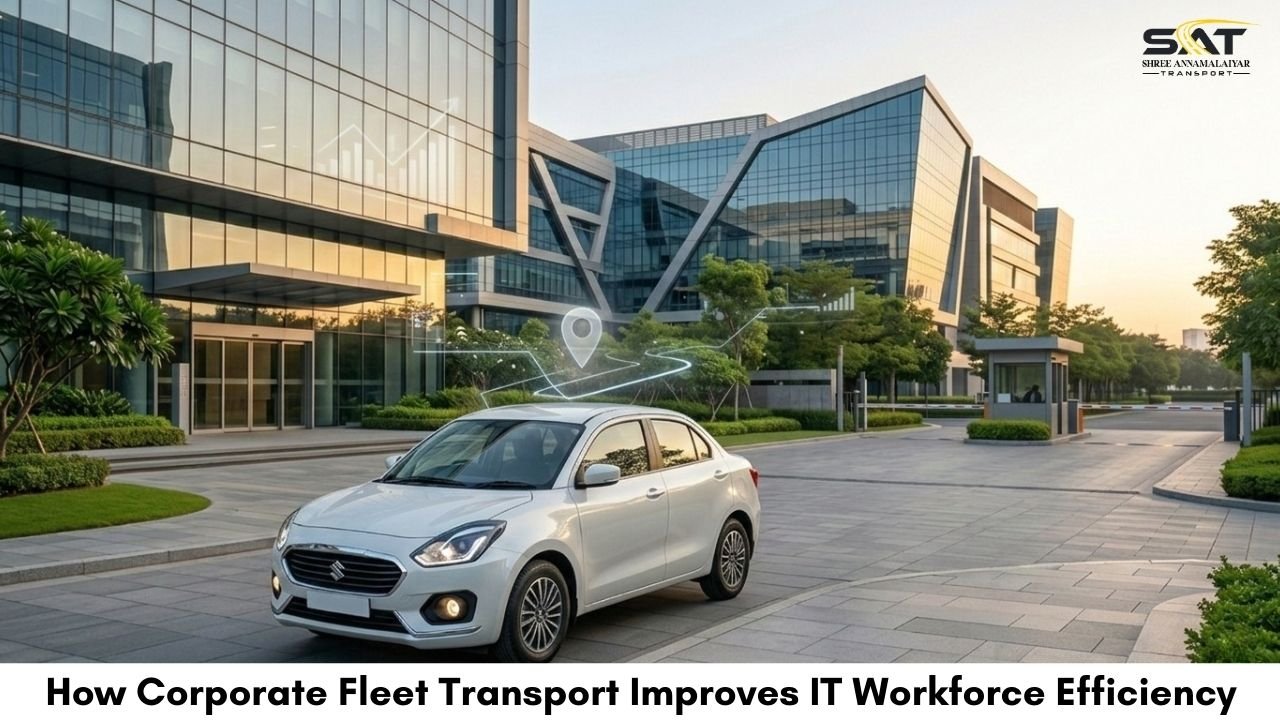
In a high-paced environment like IT, efficiency of the workforce directly affects how quickly projects are delivered and how happy clients are to pay for that and also scale up business. Most of the time, employee transportation is underrated while technology and infrastructure get their fair share. Structured corporate fleet transport, on the other hand, has a direct impact on attendance and productivity levels while maintaining operational continuity.
When commuting is operating professionally, the chances of disruption are lesser and also rise in performance. Hence, corporate fleet transportation should be seen as a strategic operations investment rather than just an operational lifeline.
Improved Punctuality and Attendance Consistency
Fleet transport is well organized and planned for employee mobility. Pre-scheduled pick-up routes are set, optimized routings are used and real-time monitoring is available. This helps to improve attendance consistency and reduce reporting delays.
In addition, workflow interruptions are reduced because teams get to work on schedule. As a result, project delivery is more predictable and dependable.
Core Efficiency Drivers
Time Discipline Framework
Traffic Risk Mitigation
Schedule Reliability System
Attendance Stabilization Model
Operational Timeliness Assurance
Enhanced Employee Productivity and Focus
The stress from commuting can take a toll on the workplace mood and energy levels. However fatigue is mitigated before the workday when safe and comfortable fleet transport is offered. Employees arrive focused and prepared.
Thus, it increases task efficiency and consistency in performance. In addition, morale is built because the challenge of travel at some point in time each day is executed professionally.
Performance Enhancement Elements
Stress-Free Commute Structure
Energy Preservation Strategy
Focus Optimization Support
Workplace Readiness Improvement
Employee Experience Enhancement
Seamless Shift-Based Transport Management
IT companies have rotational and night shifts. Lack of reliable transportation leads to productivity gaps. However, centralized fleet coordination enables travel schedules to align exactly with shift requirements.
Also, vehicle deployment is preplanned and safety measures are rigorously enforced. Hence, there is no interruption in operational continuity.
Shift Optimization Components
Shift Synchronization Mechanism
Night Operations Mobility Support
Employee Safety Reinforcement
Compliance-Controlled Transport
24/7 Workforce Enablement
Technology-Driven Fleet Optimization
GPS tracking, automated dispatch software and analytics dashboards power modern corporate fleet systems. As a result, transport performance is constantly monitored and optimized.
Route inefficiencies are identified early and corrective actions taken in a systematic manner. This bolsters both operational transparency and cost control at the same time.
Smart Mobility Enablers
Digital Route Intelligence
Real-Time Monitoring Infrastructure
Data-Based Decision Systems
Fuel & Resource Efficiency Controls
Continuous Performance Analytics
Economy and Lifetime Business Value
Long-term financial benefits are significant even though fleet transport necessitates structured planning. Productivity losses fall during periods of declining absenteeism and improved punctuality.
Administrative tasks are minimized and budgeting becomes predictable. As a result, there is a quantifiable return on investment ultimately.
Financial Impact Factors
Predictable Cost Architecture
Operational Expense Control
Productivity Loss Prevention
Employee Retention Support
Sustainable ROI Framework
Final Thoughts
Corporate fleet transport is not just a commuting arrangement; it is a strategic operational asset to IT organizations. Scheduling helps minimize travel-related stress and coordinates the staff shifts, while technology solutions drive monitoring capabilities.
In addition, cost stability is enhanced and employee satisfaction is increased. Hence, enterprise IT companies looking to sustainable growth must focus on corporate fleet transport as a key driver of operational excellence.