
Introduction
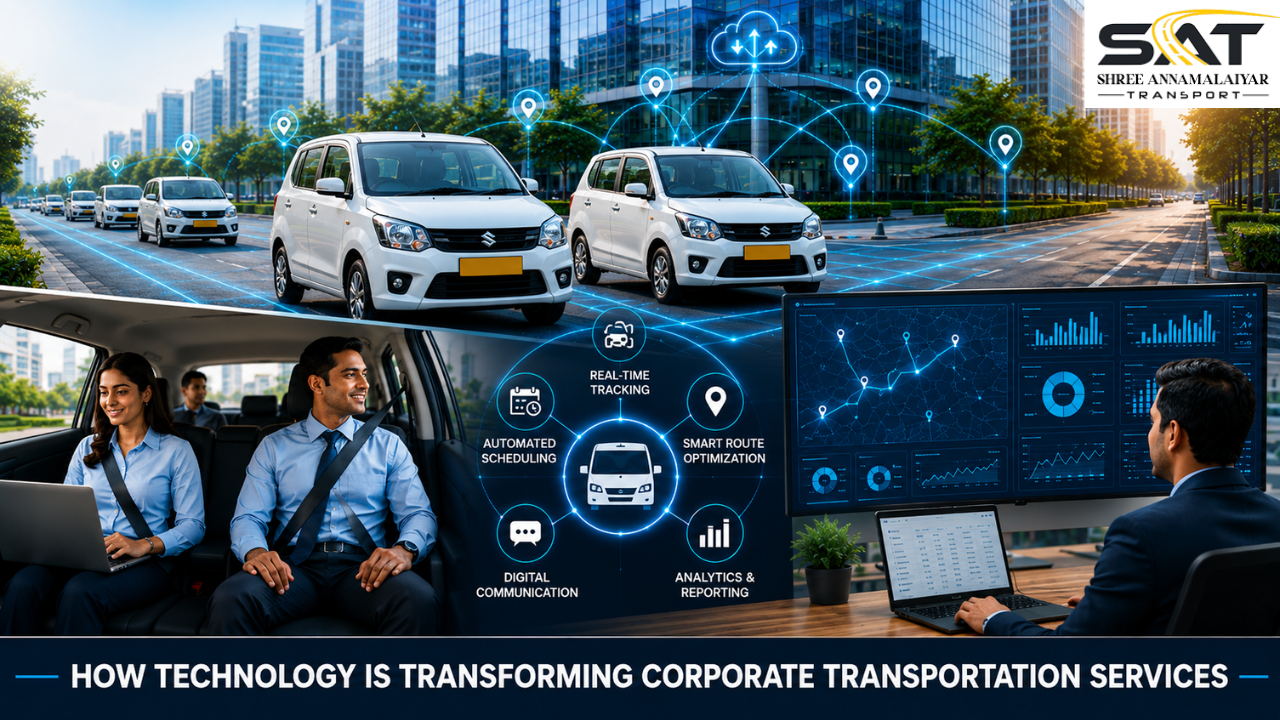
Technology is transforming almost every aspect of modern business, and corporate transportation is no exception. Companies are moving away from traditional employee transport systems and adopting smart, technology-driven solutions that improve efficiency, safety, and the overall commuting experience for employees.From GPS-enabled vehicle tracking and automated scheduling to real-time fleet monitoring and route optimization, technology is reshaping the way corporate transportation services operate. These innovations help businesses streamline operations, reduce transportation costs, and ensure employees travel safely and comfortably.
As organizations place greater emphasis on employee well-being and operational efficiency, smart transportation solutions have become an essential part of workforce management. Businesses are increasingly investing in intelligent mobility systems that offer greater visibility, reliability, and convenience.
The Evolution of Corporate Transportation
In the past employee transportation relied heavily on manual scheduling, fixed routes, and limited fleet visibility. This often resulted in delays, inefficient routes, higher fuel costs, and communication challenges.
- Delayed pickups and drop-offs
- Poor route planning
- Increased fuel costs
- Limited communication
- Reduced operational efficiency
Today technology has transformed corporate transportation into a smarter and more efficient system, helping businesses improve employee safety, optimize operations, and provide a better commuting experience.
GPS Tracking Enhances Visibility and Safety
GPS technology is one of the most significant advancements in corporate transportation.
With real-time vehicle tracking, companies can:
- Monitor fleet locations instantly
- Improve employee safety
- Track vehicle movements accurately
- Respond quickly to emergencies
- Provide estimated arrival times
Organizations benefit from more control over their operations as employees gain peace of mind that they will be monitored throughout their route.
Smart Route Optimization Reduces Travel Time
Today, Modern transportation platforms leverage intelligent route optimization to:
- Identify the fastest routes
- Avoid traffic bottlenecks
- Reduce travel delays
- Improve fuel efficiency
- Enhance punctuality
This routes not only help reduce the operational costs, but they also make an smoother experience for the workforce in Commuting.
Automated Scheduling Improves Efficiency
Manual transportation planning can be time consuming and prone to errors.
Automated scheduling systems help organizations:
- Assign vehicles efficiently
- Manage shift-based transportation
- Reduce scheduling conflicts
- Optimize vehicle utilization
- Improve service reliability
Automation ensures employees receive consistent and dependable transportation services.
Real-Time Communication Enhances Employee Experience
Technology enables better communication between employees, drivers, and transportation coordinators.
Features include:
- Mobile notifications
- Pickup reminders
- Vehicle arrival alerts
- Trip status updates
- Emergency communication channels
These tools eliminate uncertainty and help employees plan their daily commutes more effectively.
Fleet Management Dashboards Provide Better Control
Modern fleet management platforms provide transportation teams with valuable operational insights.
Businesses can monitor:
- Vehicle performance
- Driver activity
- Route efficiency
- Fuel consumption
- Service quality metrics
Access to real-time data helps companies make informed decisions and continuously improve transportation operations.
Data Analytics Drives Smarter Decisions
Data analytics is helping organizations optimize transportation strategies.
By analyzing transportation data, companies can:
- Identify inefficiencies
- Improve route planning
- Reduce operational expenses
- Enhance employee satisfaction
- Predict future transportation needs
Data-driven decision-making allows businesses to maximize the value of their transportation investments.
Technology Improves Employee Safety
Employee safety remains a top priority for corporate transportation providers.
Modern solutions include:
- GPS-enabled tracking
- Driver monitoring systems
- Emergency response capabilities
- Vehicle health monitoring
- Digital trip records
These technologies create safer commuting environments, particularly for employees working night shifts or traveling long distances.
Supporting Hybrid and Flexible Work Models
As workplaces evolve, transportation systems must adapt to changing employee schedules.
Technology-driven transportation platforms can:
- Manage flexible shift timings
- Handle dynamic pickup requests
- Adjust routes automatically
- Support hybrid work arrangements
This flexibility ensures transportation services remain efficient even as workforce requirements change.
The Future of Corporate Transportation
The future of employee transportation will be powered by even more advanced technologies, including:
- Artificial Intelligence
- Predictive analytics
- Electric vehicle integration
- Smart mobility platforms
- Autonomous fleet management systems
Organizations that embrace these innovations will gain significant advantages in efficiency, sustainability, and employee satisfaction.
Business Benefits of Technology-Driven Transportation
Companies adopting smart transportation solutions often experience:
- Lower transportation costs
- Improved employee safety
- Increased productivity
- Better attendance rates
- Enhanced employee satisfaction
- Greater operational efficiency
These benefits contribute directly to stronger business performance and long-term growth.
Conclusion
Conclusion
Technology is transforming corporate transportation services by making them smarter, safer, and more efficient. Innovations such as GPS tracking, route optimization, automated scheduling, and real-time communication are helping businesses improve employee transportation while reducing costs and enhancing operational efficiency.
As employee expectations continue to evolve, technology-driven mobility solutions will play an increasingly important role in workforce management. Organizations that invest in smart transportation systems today are building a safer, more productive, and better-connected future for their employees.